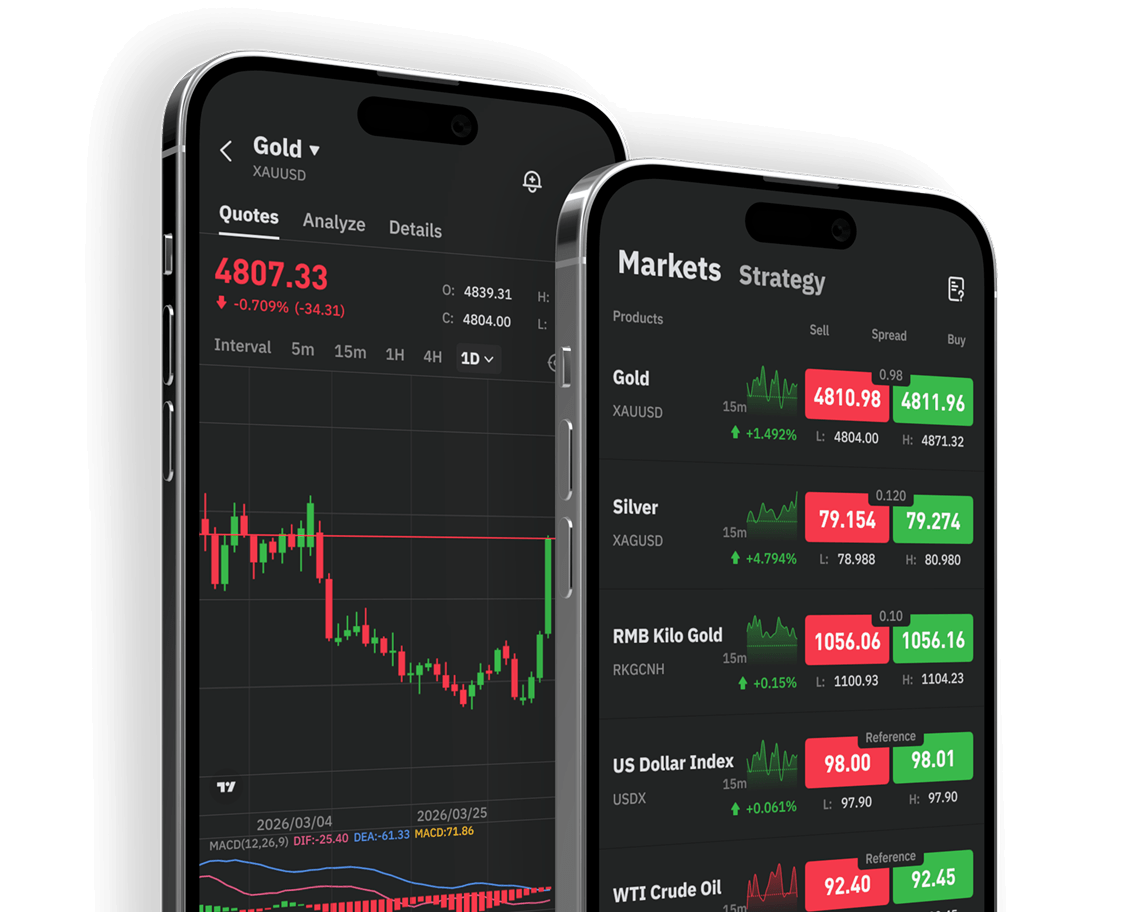


Gold prices do not move randomly. From long-term trends to short-term fluctuations, gold is typically influenced by multiple factors simultaneously. For investors, understanding these factors is not about predicting every movement, but about recognizing why the market moves and what those movements may reflect.
1. Supply and Demand
Gold is fundamentally a commodity, so supply and demand dynamics affect its price. In simple terms:
➢ When demand increases while supply remains relatively stable, prices may be supported
➢ When demand weakens with little change in supply, prices may face pressure
However, unlike ordinary consumer goods, gold also has financial and safe-haven attributes. Therefore, supply and demand are only part of the overall equation.
2. U.S. Dollar Trends
Gold typically shows a relationship with the U.S. dollar. In many market environments, gold prices and the dollar often demonstrate an inverse relationship:
➢ A stronger dollar may put pressure on gold prices
➢ A weaker dollar may provide support to gold prices
This relationship is not perfectly synchronized, but the dollar remains an important variable in gold market analysis.
3. Safe-Haven Sentiment
Gold has long been regarded as a safe-haven asset. During periods of heightened uncertainty—such as geopolitical tensions, increased financial market volatility, or deteriorating economic expectations—gold often attracts greater attention.
When risk appetite declines, some capital may shift toward assets perceived as relatively stable and widely recognized.
4. Interest Rates and Real Yields
Interest rate environments significantly influence gold prices. Since gold does not generate interest, higher rate environments may encourage capital to move toward yield-bearing assets. Conversely, when interest rate expectations decline and real yields fall, gold may become more attractive.
This explains why markets closely monitor:
➢ Interest rate policy expectations
➢ Inflation data
➢ Real yield movements
➢ Key economic indicators
5. Inflation Expectations
Gold is often viewed as a hedge against inflation expectations. When markets worry about declining purchasing power, gold may receive increased attention due to its perceived long-term store-of-value characteristics.
However, gold does not necessarily rise in every inflationary environment, as its performance is also influenced by interest rates, the dollar, and overall risk sentiment.
6. Market Sentiment and Capital Flows
In practice, short-term gold price movements are also affected by market sentiment and capital flows, such as:
➢ ETF inflows and outflows
➢ Changes in futures market positioning
➢ Institutional attitudes toward risk assets
➢ Shifts in short-term market sentiment
These factors can lead to unexpected short-term volatility in gold prices.
Conclusion
Gold prices are influenced not by a single factor but by a combination of supply and demand, the U.S. dollar, interest rates, safe-haven sentiment, inflation expectations, and capital behavior. Understanding the interaction among these factors helps investors build a more comprehensive view of the gold market rather than relying on isolated news events.
Risk Disclosure
Precious metals and CFD trading involve risk. Leverage may amplify both gains and losses. This article is for educational purposes only and does not constitute investment advice. Please fully understand product rules and risks before making any investment decisions.