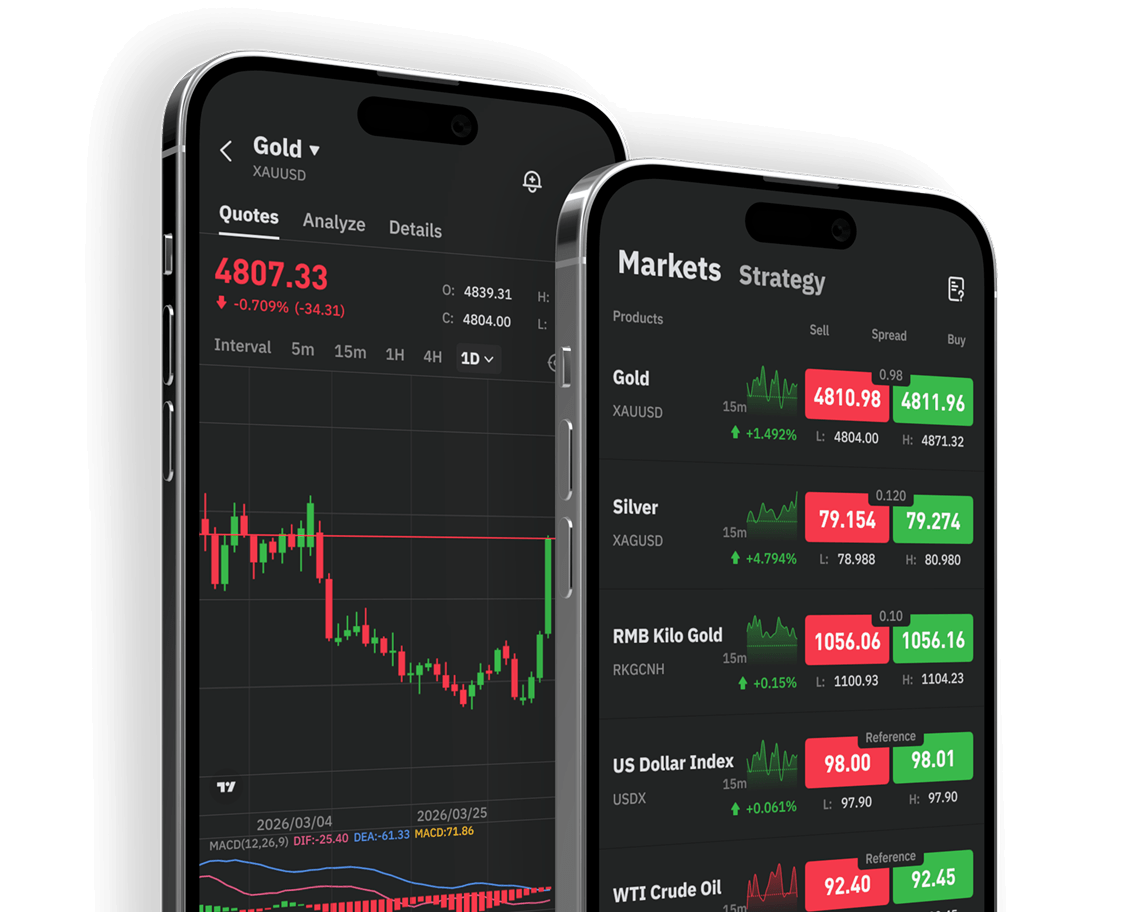


Among various gold investment methods, spot gold has attracted significant attention due to its trading flexibility, active market participation, and convenient access. For those who wish to better understand electronic gold trading mechanisms, it is important to first grasp the core characteristics of spot gold.
1. Margin Trading
Spot gold trading typically operates under a margin system. This means investors do not need to commit the full contract value but instead participate with a certain percentage as margin.
Significance of the Margin System
➢ Improves capital efficiency
➢ Allows participation with relatively smaller funds
➢ Enhances trading flexibility
Important Note
While margin improves capital efficiency, it also amplifies the impact of price fluctuations on the trading account. Effective risk management is therefore essential.
2. Two-Way Trading
Spot gold generally supports two-way trading. In simple terms, investors may seek opportunities when prices rise (long positions) and when prices fall (short positions).
What Does This Mean?
➢ Opportunities may arise when gold prices increase
➢ Opportunities may also arise when gold prices decline
➢ Trading is no longer limited to “buy low, sell high”
For investors interested in capturing movements in both directions, this structure provides considerable flexibility.
3. Extended Trading Hours
Compared with some other trading methods, spot gold typically offers extended trading hours. This provides greater flexibility for individuals balancing work and personal schedules.
However, longer trading hours do not mean constant monitoring is required. What truly matters is understanding market rhythms and selecting suitable trading periods.
4. Strong Market Liquidity
Gold is one of the most actively followed trading instruments globally. During active market sessions, it typically demonstrates strong liquidity and broad participation. Higher liquidity helps improve trade execution efficiency and ensures smoother price movements.
5. Trading Costs: Spreads and Holding Costs
In many cases, the primary costs of spot gold trading are reflected in bid-ask spreads and position holding costs. Before trading, investors should clearly understand platform-specific rules, including:
➢ How spreads are calculated
➢ Whether overnight holding costs apply
➢ Whether platform rules are transparent
Understanding the cost structure is a crucial step before participating in trading.
6. Risks and Opportunities Coexist
The advantage of spot gold lies in its flexibility, but flexibility also requires higher operational discipline. Due to relatively fast price movements and the margin mechanism, beginners lacking risk awareness may experience significant short-term volatility pressure.
Therefore, those interested in spot gold are generally advised to follow this progression:
➢ Learn the trading rules first
➢ Practice with a demo account
➢ Gradually transition to live trading
Conclusion
Spot gold trading features margin trading, two-way opportunities, extended trading hours, and strong liquidity. While these characteristics make it attractive to many investors, they also require a clear understanding of rules and risks before participation. For beginners, building knowledge before active trading is usually more important than rushing into the market.
Risk Disclosure
Precious metals and CFD trading involve risk. Leverage may amplify both gains and losses. This article is for educational purposes only and does not constitute investment advice. Please fully understand product rules and risks before making any investment decisions.