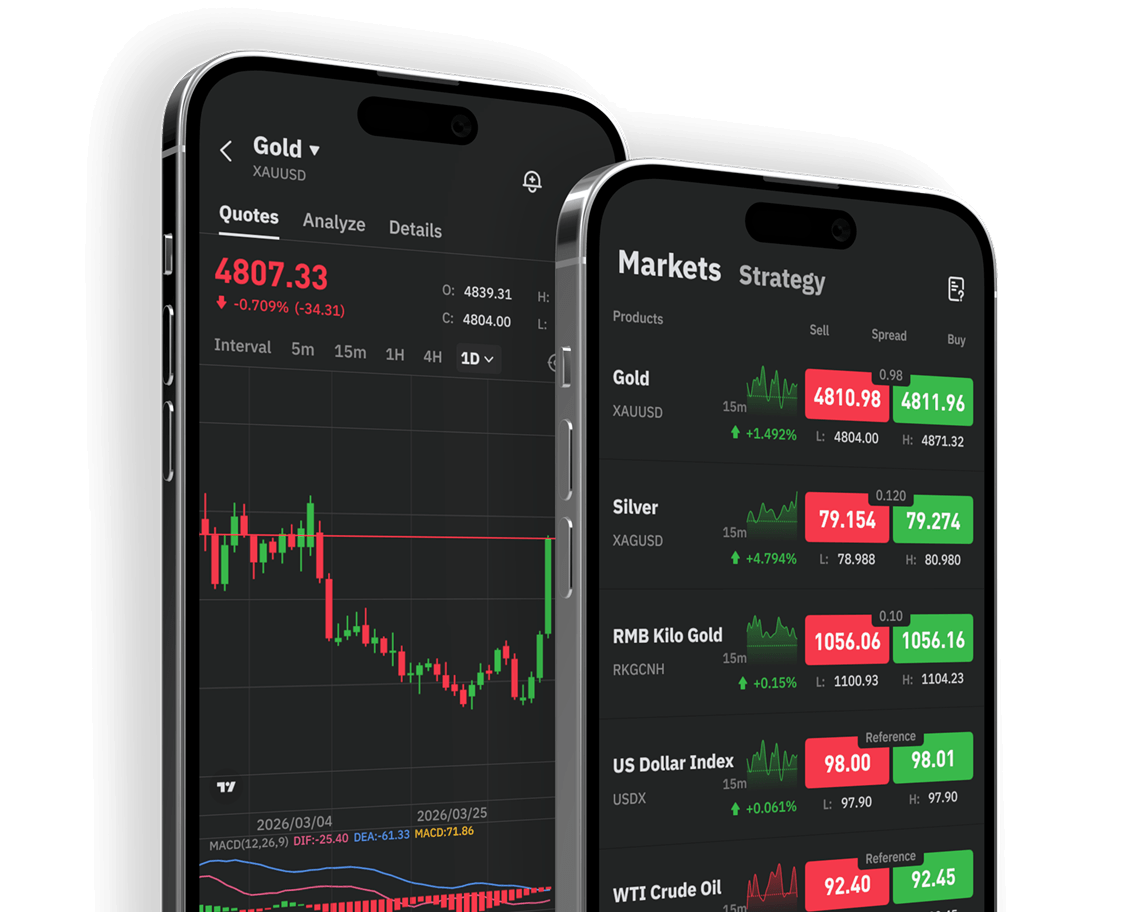


Candlestick charts are one of the most commonly used tools in financial markets and form the basic language of technical analysis. For beginners in gold trading, understanding candlesticks is not about predicting price direction from a single bar, but about learning to read market sentiment and shifts between buyers and sellers.
1. What Is a Candlestick?
Each candlestick is typically composed of four prices:
➢ Open
➢ High
➢ Low
➢ Close
The body and shadows (wicks) help visualize how price moved during a specific time period.
2. What Do Candlesticks Reflect?
A candlestick essentially records the balance of power between buyers and sellers over a given time frame.
It helps traders observe:
➢ Whether the market is strong or weak
➢ Potential support or resistance levels
➢ Whether the trend is continuing, consolidating, or possibly reversing
A single candlestick cannot tell the full story; its meaning becomes clearer within a broader market structure.
3. How to Understand Common Candlestick Patterns
1. Long Bullish Candle
A long body closing significantly above the open suggests strong buying pressure during that period. If it appears at a breakout level, it may indicate short-term strength. If it appears after an extended rally, traders should be cautious of chasing the move.
2. Long Bearish Candle
A long body closing well below the open indicates selling dominance. If it follows a break below key support, it may signal short-term weakness. If it appears after a prolonged decline, it could reflect emotional selling.
3. Long Upper Shadow
This indicates that price moved higher but failed to hold gains, suggesting overhead resistance. Repeated long upper shadows at high levels may signal increasing selling pressure.
4. Long Lower Shadow
This indicates that price dipped lower but recovered, suggesting buying interest below. If near a key support level, it may signal stabilization.
4. Avoid Focusing on a Single Candle
Beginners often make the mistake of drawing conclusions from a single pattern.
Instead, candlesticks should be analyzed alongside:
➢ Market location (high, low, or mid-range)
➢ Recent price structure (after a rally or decline)
➢ Trend direction (with-trend or counter-trend)
➢ Proximity to key support and resistance levels
The same candlestick may have different meanings depending on its context.
5. How to Use Candlestick Analysis
Candlestick analysis works best as a tool to observe market conditions rather than as a standalone decision-making method.
In practice, it is recommended to combine it with:
➢ Trend analysis
➢ Moving averages
➢ Volatility tools such as Bollinger Bands
➢ Support and resistance levels
➢ Risk management rules
Conclusion
Candlestick charts are a foundational tool for understanding price movements in the gold market. For beginners, learning to interpret structure and context—rather than memorizing pattern names—is far more valuable.
Risk Disclosure
Precious metals and CFD trading involve risk. Leverage may amplify both gains and losses. This material is for educational purposes only and does not constitute investment advice. Please understand product rules and risks before making investment decisions.